Saturday, June 28, 2008

Gipsy Kings Fuego! The Videos


DID YOU KNOW ...

Taismary Aguero was born and raised in Cuba before becoming a naturalized Italian citizen. She is one of the most famous volleyball players in the 2000s. Under the hands of Taismary Aguero, Cuba won the gold medal in volleyball in the 2000 Olympic Games in Australia. However, she escaped to Italy in 2001 and having won a national team call-up became the first naturalized volleyball player to score for Italy. Perhaps her greatest triumph was captaining her new country to their first World Cup triumph in Tokyo, Japan, in 2007. Ironically, Italy, led by the amazing play of Taismary Aguero, defeated Cuba 3-0 (27-25, 25-19, 25-16) in the finals.

Cuba did not sent a boxing team to the 1985 World Cup in Seoul, South Korea's capital. Why? Because Fidel Alejandro Castro Ruz did not recognize South Korea as an independent and sovereign country. There were many famous boxers who did not go to Korea: Juan Torres Odelin, Pedro Orlando Reyes, Arnaldo Mesa Borell, Jesus Sollet Tomasen, Adolfo Horta Martinez, Eduardo Correa Ferrer, Candelario Duvergel Odelin, Angel Espinoza Capo, Julio Quintana Martinez, Pablo Romero Hernandez and Teofilo Stevenson Lawrence.

Ramon Fonst Segundo has won more Olympic gold medals than Teofilo Stevenson (boxing), Alberto Juantorena Danger (track and field), Mireya Luis Hernandez (volleyball) and Felix Savon Fabre (boxing).Who is he? Ramon Fonst was a famous fencer in the 1900s, 1920s and 1930s.
He was born into a sports-oriented family in the Cuban capital of Havana on August 31, 1883. His father was a sportsman in the 1870s and 1880s. Like Jose Raul Capablanca (chess) and Eligio Sardinas Montalvo (boxing), he was an athlete who always competed with love for Cuba.
Ramn Fonst obtained 125 medals in competitions held in Europe, Latin America and North America. In the 1900 Olympic Games in France, Ramon won the gold medal in the epee event, and in the 1904 Summer Olympics in the United States, he won three gold medals. In 1926, he won two gold medals at the Central American and Caribbean Games in Mexico City. Certainly, Ramon Fonst is the greatest Latin American athlete of the 20th century.

In the early 1990s, large number of athletes began leaving their country because of poor economic conditions there and severe treatment by the secret police. Many sought refuge in the United States, Spain and Canada.

Cuba sent 2 athletes to the 2003 World University Games, which were held in Daegu, South Korea. They were Yordanis Arencibia and Yurileidys Lupetey ( judo).

The 1987 World Junior Volleyball Championship was boycotted by Cuba. The place: South Korea. For the first time since 1978, volleyball players from Cuba did not part in an Olympic tournament. The team Cuban did not defend its world title it had won in Rome two years before.

Cuba sent 120 athletes to the 1973 World Student Games, which were held in Moscow, USSR (currently Russia).The Cuban contingent participated in nine Olympic sports: basketball, athletics, fencing, gymnastics,volleyball, waterpolo, diving, tennis and wrestling. The best athlete was Alberto Juantorena, who won a gold medal in the men's 400 meters.

The Second Baseball World Cup was played in 1939 in Cuba. Three teams took part and the hosts beat Nicaragua in the final in Havana.

In 2006, Osmany Juantorena Portuondo was the 18th Cuban athlete to be disqualified for drugs. He is Alberto Juantorena's grandson.

The Cuban dictatorship restricts the sports people's contacts with non-allies nations (especially South Korea, Poland, Puerto Rico, El Salvador, Hungary and the Czech Republic). It allows few Cuban athletes to travel outside the country.

DID YOU ALSO KNOW THAT:

Like Alexandre Alekhine (France), Bobby Fischer (USA) and Garry Gasparov (Russia), Jose Raul Capablanca y Graupera is considered by experts as one of the most important chess players of the twentieth century. He won the title of world chess champion from 1921 to 1927.
Where was Jose Capablanca born? He was born on November 19, 1888, in Havana.

The problem of illegal drug usage among Cuban athletes closed the competition in the 1983 Pan American Games in Caracas, the capital city of Venezuela. The most notable disqualification was Cuban weighlifter Daniel Nunez, who had won a gold medal at the 1980 Olympic Games in Moscow, URSS. He was voted athlete of the year for 1982 by Prensa Latina.

Jorge Enrico Blanco was one of the Cuba's best known and well-loved boxers. Why? In 1967, he won the Pan American lightweight title.

In the Olympic Games of 1904, the Cuban fencing team won 8 medals (3 golds, 2 silvers and 3 bronzes).

Maria Teresa Mora Iturralde was a famous chess player. In 1922, she won the National Chess Championship of Cuba.

From 1954 to 1968, Bertha Diaz won 258 gold medals. At the Pan American Games in 1955, she won the 60-meter sprint and qualified for the 1956 Olympic Games. Unfortunately, she escaped from Cuba in the 1960s when it became a communist dictatorship. In 1956, she set a new Pan American record of 11.20 seconds in the 80-meter hurdles.

In February 1950, Rafael Emilio Fortun Chacon set a new Cuban and world record in the 100-meter sprint at the Central American and Caribbean Games in Guatemala City.He was born on Agust 5, 1919, in Camaguey, Cuba.

Manuel Sanguily became the first Cuban swimmer to classify in the finals at the Olympic Games, where he ended seventeenth in the world in 200-meter breaststroke style competition in Australia in 1956.

The Cuban volleyball team is a disaster. Why? Because more than 14 volleyball players sought political asylum in Europe and Puerto Rico (2001-2007). They included: Raydel Poey, Yasser Portuondo, Javier Gonzalez, Javier Brito, Maikel Salas, Yosleider Cala, Osvaldo Hernandez, Dennis Angel, Alexis Battle, Laseer Romero, Ramon Gato, Jorge Luis Hernandez, Ihosvany Hernandez and Leonel Marshall.

Alejandro Guevara Onofre: He is a freelance writer. Alejandro is of Italian, African and Peruvian ancestry. He's studied political science and journalism. He has published more than seventy-five research papers in English, and more than twenty in Spanish, concerning the world issues, Olympic sports, countries and tourism. His next essay is called "The Dictator and Alicia Alonso". He is an expert on foreign affairs. Furthermore, Alejandro is the first author who has published a world-book encyclopedia in Latina America.

He admires Frida Kahlo (Mexican painter), Hillary Clinton (former First Lady of the USA), and Jimmy Carter (former President of the USA). His favorite film is "Gorillas in the Mist". Some of his favorite books are "The Return of Eva Peron and the Killings in Trinidad" (by V.S.Naipaul), "Las Mujeres de los Dictadores" (by Juan Gasparini) and "Murder of a Gentle Land" (by John Barron and Anthony Paul). His personal motto is "The future is for those people who believe in the beauty of their dreams" by Eleanor Roosevelt.

top dance music
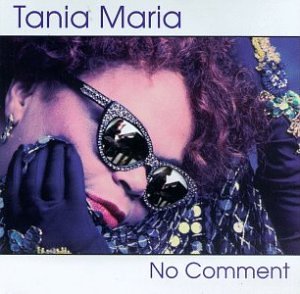
No Comment

Customer Review: vocables in unison with jazz piano - nice!
Nice jazz outing! Often, Tania sings the melody line with vocables in unison with the piano an octave or two higher. She phrases her voice melodies like any other wind instrument, say, sax or flute. There are no lyrics and no "solos," scatting or instrumental. She and her small group get a groove going - maybe funky, maybe bluesy, maybe a bit of swing, maybe a bit of bossa feel - then sings/plays a catchy melody on top. It would be classified as a jazz recording, the "Brazil feel" comes out a bit but is not predominant composition, arrangement, or performance. Very nice music.
Customer Review: DON'T judge this album by it's COVER !
I was just scanning brazilian jass stuff one day and came upon TM by accident.WOW.At the price, I could take a chance and glad I did.This woman does not scat (if that is the right term) like Bobby Mc Ferrin---who is so obviously making crazy sounds that only embarrass me at times.......ha !Tania Maria's voice IS another insturment !Jazzy/and slightly funky...... she will MAKE you like brazilian music !


Blending in Socially

Let's begin with stereotypes. As mentioned above, there are blond haired, blue eyed Latin Americans. Some may be very tall or heavy as well. They might speak other languages, have spent time in another country, or live in mansions. Forget about stereotypes. The best thing to do is to come with an open mind and take in everything around you. Along with forgetting stereotypes, there are some cultural items to remember when coming to Latin America

One important thing to keep in mind is the personal space bubble. Here in Latin America, people stand closer together than those in other countries. Although it may seem intrusive when someone is just a few inches away from your nose, resist the temptation to step back. Personal space is just smaller here. When you're greeting or leaving women use air kisses near the check. When men greet men they usually shake hands and embrace, for greeting women they use air kisses. When leaving, make sure you say good-bye to everyone.

When meeting someone you'll be sure to find out that time is relative here in Latin America. If you're meeting someone for lunch at noon, don't be surprised if they're a half an hour late. They're not trying to be rude, that's just the way things are here. So next time you're meeting someone, try to be a little late as well.

Make an effort to learn a bit about the country's history and culture before you go. This is a great way to start a conversation. Latin Americans love conversation, so be ready to talk about anything. Try keeping abreast of the news, especially the local news as it's a favourite topic among Latin Americans. People here like to express themselves with gestures, so try using your hands when you talk. And remember about the personal space bubble? Since people here stand closer together when they talk, they don't need to talk so loudly, so lower your voice while carrying on a conversation or you'll be accused of shouting.

Speaking of talking, learning a bit of the language show that you're willing to make an effort to learn more about their country. Spanish is the main language used in Latin America. So if you learn the basics, you can use it in many countries. Portuguese is used in Brazil and French is still used in some countries as well. And as English is the world's language, most people, especially young people have a decent grasp on English. However, if you are going to use English to communicate, speak a bit slower and without slang. But at the same time, there's no need to shout or speak to people as if they were ignorant. Although they may not understand you, try writing things done. Latin Americans are very helpful and will go out of their way to show you where something is, so be considerate and make sure to thank them for helping you out.

Don't be afraid to try something new. Latin America has loads of local delicacies for you to try. When dining out, wait for others to be served before beginning. And be sure to hold your fork in one hand and your knife in the other. Cut one bite at a time and keep your fork and knife in the same hands, don't switch hands.

Going along with trying new things is venturing out and using the public transport. At first it may seem like a daunting task, as driving and organization may seem a bit iffy, but you'll get used to it. Besides being cheaper than taking taxis, it's safer as well.

Prices are somethings that might take some time to get used to. Although things might be considerably cheaper than in your home country, keep in mind that salaries might be lower. Don't go on and on about how cheap things are, because for those earning money in the local currency, they're not really that cheap.

Most importantly, remember that you're a guest and as such don't speak badly about the country you're in. Of course there are going to be differences, some good, some bad. But don't compare your country to theirs in a negative light. No one wants to hear how horrible their country is. Pay compliments instead. Latin Americans are proud of their culture and native people. Food, handicrafts and the arts are good things to compliment. It's best to take advantage of your time in the country and see some of the local festivals and events. They're unforgettable and are a great way to get an inside look at the culture.

When in Rome

So remember, blending physically and socially will greatly help you the next time you're in Latin America. Make an effort and you will be rewarded for doing so.

Sharon de Hinojosa (naturegirl321) has lived and worked (mainly teaching English) in the US, Scotland, Spain, the Czech Republic, China, Korea, and Peru. And taught short-term in Venezuela and Taiwan. Her work has been featured in Transitions Abroad, Viva Travel Guides, TEFL News, and ELT World.

She has created The LA Job List http://www.thelajoblist.blogspot.com which lists schools, institutes and universities in 19 Latin American countries which offer English teaching positions.

Since living in Peru since August 2006, she wrote The Ultimate Peru List http://www.theultimateperulist.blogspot.com . With 50 pages and updated monthly it's a comprehensive guide for those living in or moving to Peru.

latin music download

Gloria Estefan and Miami Sound Machine - Evolution

Customer Review: Lot of music for the money!
Gloria arrived on the music video scene in the mid eighties. You will see some videos from that era. What was played on MTV or VH1 was that `cat video,' "Bad Boys". Even way back then, the cat costumes and makeup are very well-done. "Dr. Beat" is a goofy, conglomeration of people in a hospital setting. There are some concert stage videos "Betcha Say That" and "Words Get In the Way." Early music videos required color and dance to attract the attention of viewers and "Rhythm is Gonna Get You" fits that category as well as "Conga" and "Get On Your Feet", and "1-2-3." A superb balladeer with a sultry voice, you will see videos "Can't Stay Away from You." Although I am not a "Gloria fan", this collection is good because it is strictly music, no interview, no extra non-music footage. I like a collection with JUST MUSIC! For the people who love Gloria, you will see the English and Spanish versions "Oye Mi Canto" "Don't Wanna Lose You", and "Anything for You" and "Here We Are." If you are new to Gloria or love Gloria's music, this a great collection. It will introduce you to her evolution in music....Mzrizz
Customer Review: A must have for any Gloria fan or pop fan.
Very good collection of her early hits with Miami Sound Machine. It covers her songs from 1984(Dr. Beat) to 1989(Here We Are). My favorite Estefan song is on this video,(Can't Stay Away From You).


Get ready to rumba! This is a fabulous no bake key lime pie recipe to make for a party or special occasion when you want to make something a little bit special. Every bite will have the taste of toasted coconut which will transport your taste buds to a warm island getaway, and the rum flavoring adds an extra kick.

Crust

1 cup toasted coconut

6 tablespoons margarine or butter, melted

12 vanilla sandwich cookies, finely crushed

Filling

1 (14 oz.) can sweetened condensed milk do not use evaporated milk

1 (8 oz.) package cream cheese, softened

1/2 cup key lime juice or lime juice

1/2 teaspoon rum extract

Directions

How to make toasted coconut: spread coconut on a cookie sheet. Bake at 350 degrees for 6 to 8 minutes or until light golden brown; stir occasionally. Set aside 1 tablespoon of the toasted coconut for the topping.

Make the crust: In bowl, combine coconut, margarine and cookie crumbs; mix thoroughly. Press mixture firmly into a 9-inch pie pan, on bottom and up the sides of pan. Refrigerate crust for 30 minutes.

Make the filling: In a large bowl, combine the condensed milk and cream cheese; beat until smooth and fluffy. Mix in the lime juice and rum extract; stir thoroughly.
Pour into pie crust. Sprinkle leftover toasted coconut on top.

Refrigerate pie for 3 to 4 hours until set. Store leftover pie in the refrigerator.

Easy Key Lime Pie Recipe: Breezy Easy Key Lime Pie

If youre just learning how to make a key lime pie, this is a great frozen key lime pie recipe to start with. If you dont have fresh ginger, then substitute with ginger spice. Remember that authentic key lime pie isnt really all that green some people like to add green food coloring but its not necessary.

3/4 cup key lime juice

1 (14 oz.) can sweetened condensed milk do not use evaporated milk

1 (3 oz.) package cream cheese

3/4 teaspoon fresh ginger, grated

2 1/2 tablespoons lime peel

1 pint whipping cream

3 tablespoons sugar

9-inch graham cracker crust, unbaked

Directions

In a medium sized bowl, mix together lime juice, sweetened condensed milk, cream cheese, ginger and 2 tablespoons of lime peel. Mix on HIGH speed until thoroughly blended.

In a second bowl, beat together the whipping cream and sugar. Beat until firm peaks form. Fold whipped cream into cream cheese mixture; blend well. Pour entire mixture into pie crust. Sprinkle remaining 1/2 teaspoon lime peel on top.

Freeze pie until nice and firm. Let pie stand at room temperature for 20 to 30 minutes before serving. Put leftover pie back into freezer.

Easy to make fun to drinkhttp://www.1st-milkshake-n-smoothie-recipes.com

90's dance music